

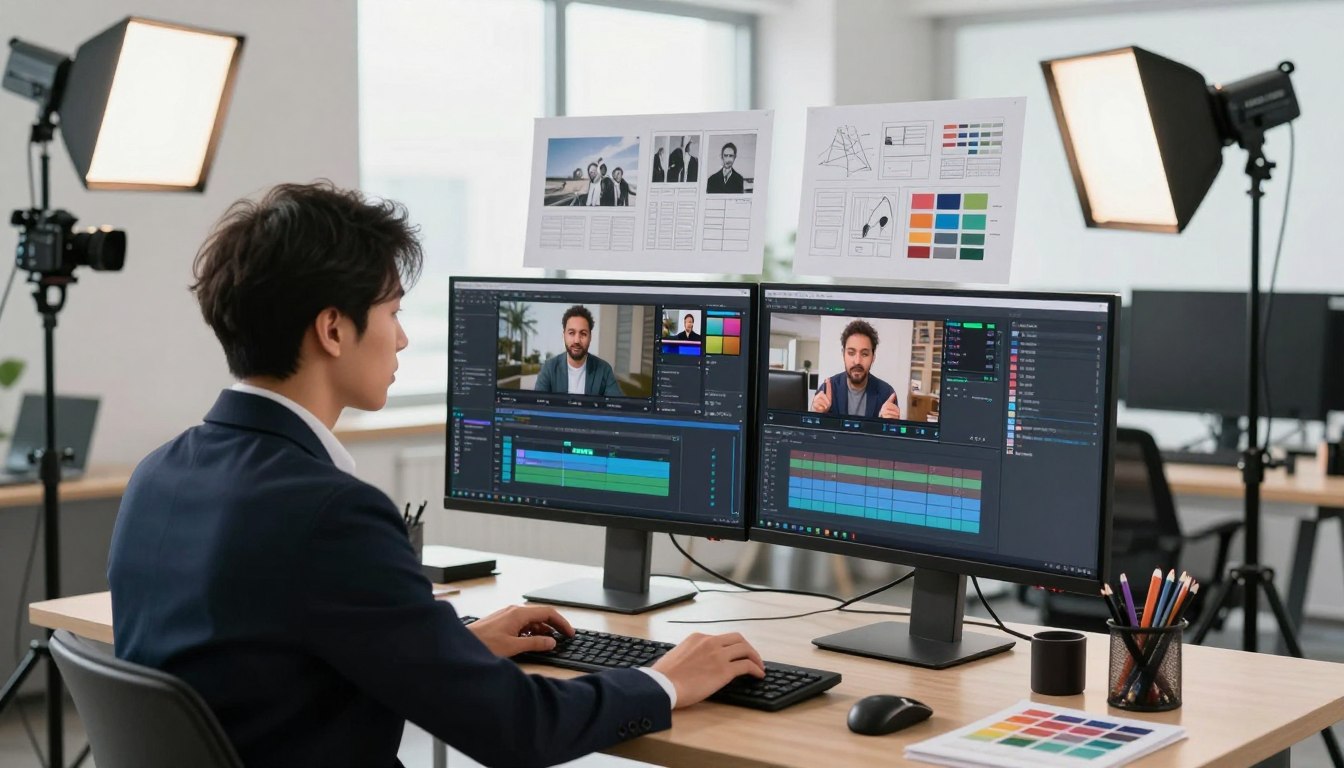
What if you could turn a few prompts, an outfit pick, or a single photo into a short, lifelike clip that matches your fantasies? This guide explains what an ai porn video maker is in plain terms: a video maker that uses a generator (often paired with an image generator) to create NSFW clips from prompts, menus, or uploads.
Expect short, realistic clips today that still show occasional artifacts. The main appeal is clear: personalized porn lets you craft scenes unlike generic tube content. Some platforms mix menu-based controls (outfits, poses, settings) with prompts for fine detail.
We review tools, platforms, and workflows so shoppers in the United States can match a creator tool to budget, privacy, and style needs. You’ll see three common paths: text prompting, menu-driven creation, and image-to-video pipelines that bring stills to life with just a few clicks.
Responsible note: this roundup focuses on consensual adult content only. Avoid services that promise nonconsensual “undress” features for real people.
Key Takeaways
- “ai porn video maker” refers to generators that create NSFW clips from prompts or uploads.
- Today’s clips are more lifelike but can show artifacts; realism varies by platform.
- Three creation paths: text prompts, menu-based tools, and image-to-video workflows.
- Compare platforms for realism, speed, export options, price, and privacy safeguards.
- Personalized porn is about custom fantasies, not replacing mainstream tube content.
- Use only consensual content and avoid services that target real people without consent.
What shoppers want from adult AI video platforms in the United States right now
U.S. buyers now expect fast, clean renders that look natural and finish in minutes. Commercial searches favor services that deliver quick turnaround and fewer obvious glitches.
Realism for most shoppers means stable faces and hands, consistent bodies across frames, and scenes that don’t morph mid-clip. It isn’t blockbuster VFX; it is fewer artifacts and steady anatomy.
Demand is shifting toward image-to-video workflows. People want to upload a safe photo or use a created image and animate it into a short clip. That feels more controllable than pure prompts.
Many platforms advertise deepfake-style personalization via avatars or inspiration features. Consent is the make-or-break line when real-person images are part of the process.
Custom fantasies are the differentiator: shoppers choose outfits, settings, and poses instead of relying on generic picks. Free trials let buyers test generator quality, UI, and export rules before paying.
What to check in a trial
- Are trial creations public or private?
- Are videos allowed and downloadable?
- Is quality throttled or watermarked to force upgrades?
| Buyer Need | Expectation | Why it matters | Trial check |
|---|---|---|---|
| Speed | Minutes per render | Reduces churn and increases purchases | Test render time |
| Realism | Fewer artifacts | Feels believable to viewers | Compare frames for consistency |
| Personalization | Image-to-video options | More control for custom scenes | Upload a sample image |
| Privacy | Consent rules | Legal and ethical safety | Check avatar and upload policies |
ai porn video maker tools: how to evaluate platforms without getting burned
Start by choosing the generation mode that matches your needs. Pick text-first, image-to-clip, or a hybrid menu-plus-prompts path. That choice defines control, cost, and privacy risk.
Why hybrids often win: menus speed up basics like body type, outfit, and setting. Prompts then add small touches that make a scene feel personal. Many top platforms combine both for best results.
Quality benchmarks to score every tool
- Resolution & max clip length — higher is usually better for realism.
- Frame-to-frame consistency — stable faces, hands, and limbs matter most.
- Anatomy stability — check hands, teeth, and eyes across frames.
| Factor | What to test | Buyer impact | Quick check |
|---|---|---|---|
| Generation mode | Text, image, hybrid | Control vs. risk | Pick a sample workflow |
| Speed | Minutes per render, queue | Turnaround and churn | Run a trial render |
| Exports | Formats, watermarks, private gallery | Usability and privacy | Check download rules |
Don’t get burned: never upload sensitive images until you confirm retention, training policies, and whether trial outputs appear publicly. Read terms before you pay.
Top tool categories to include in a product roundup
The market splits into clear categories so you can match a platform to your goals: speed, control, realism, or storytelling.
Image-to-video creators
Best when you already have a still you like. These tools animate a photo into a short explicit clip with fewer surprises than prompt-only systems.
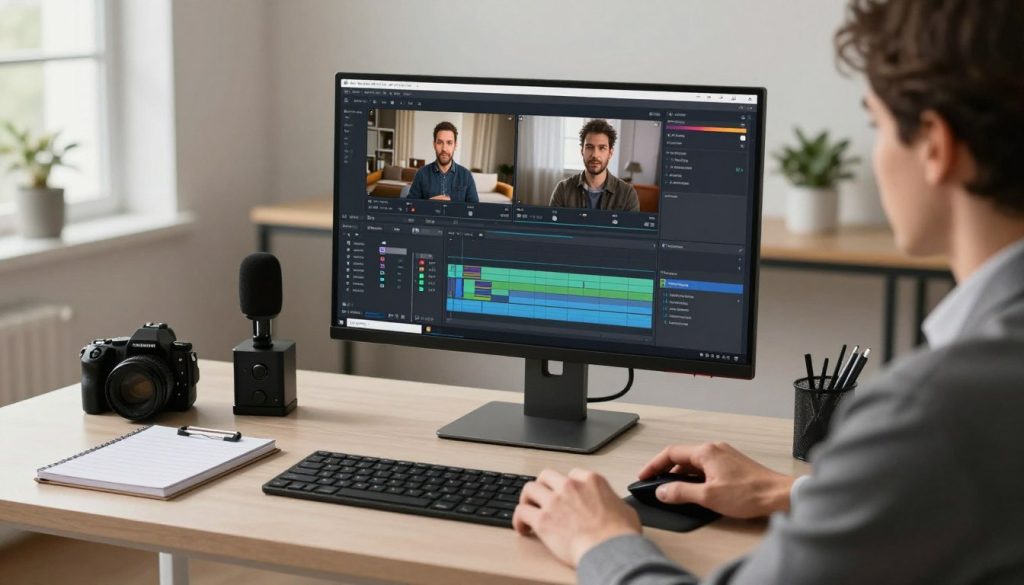
Text-to-video and prompt-first generators
Great for pure imagination and fast concepting. These rely on prompts for everything. Check for prompt adherence, stable characters, and consistent motion to avoid drift.
All-in-one suites
Combines an image generator, a video generator, and basic editing. Ideal if you want a consistent look and fast iteration without switching platforms.
Roleplay and companion platforms
These focus on ongoing fantasies, chat-driven scenes, and sometimes voice. Generator add-ons can turn conversations into visuals when you want story continuity.
| Category | Strength | When to pick |
|---|---|---|
| Image-to-video | Control, fewer surprises | You have a still and want faithful animation |
| Text-to-video | Imagination, speed | You prefer prompt-driven creation and variety |
| All-in-one suites | Consistency, workflow speed | You want creation, editing, and export in one place |
| Roleplay/companion | Story and continuity | You want chat-led scenes and repeatable characters |
Realism vs. style: choosing between lifelike porn video and hentai/anime creations
Deciding on photorealism or stylized art is the first move in any creation workflow. Pick a direction based on how tolerant you are of artifacts and how much polish you need.
Photorealistic clips aim to be “passable to the average viewer.” That usually means stable lighting, consistent faces, believable motion, and minimal frame breaks. Per ThePornDude, top apps can reach this standard, though occasional hallmarks remain.
When stylization wins: anime, hentai, and other art styles mask glitches. Stylized art smooths motion and hides anatomy slips. For fast action or complex poses, these modes often produce higher perceived quality.
Scene libraries matter. Templates, hardcore presets, and setting packs speed setup and increase scene variety. They make repeatable results easier than building from scratch.
Practical workflow
- Test the same prompt in photorealistic and anime modes.
- Compare a still image and a short clip for consistency.
- Pick the style that gives you more repeatable keeper results.
Consent, legality, and guardrails for AI-generated sexual content
Clear rules and solid guardrails are non-negotiable when creating sexual content online. In the United States, the same bright-line laws that apply to non-AI material apply here: only generate consenting adults and avoid any content that would be illegal in a non-AI setting.
What platforms commonly ban
Most reputable platforms ban nonconsensual nudity, revenge material, and anything that implies minors. Treat these bans as absolute. “I didn’t mean it” won’t protect you or the platform.
Deepfakes and real-person images
Using real-person images without clear consent is the core legal and ethical risk. Tools marketed as “inspiration” or “undress” are red flags. If a product pushes nonconsensual use, move on.
Why moderation can fail at scale
“At scale, trust-and-safety teams and automated detection can miss abusive uploads.”
Large platforms have struggled to stop proliferation. That’s why buyers should favor strong policies, human review, and fast takedown processes.
Age certainty and CSAM risk
AI can change apparent age. Platforms can’t reliably verify age from a single image, which raises child sexual abuse material risk and regulatory pressure. Several states now require stricter age checks, so expect sign-up friction and compliance rules on many pages.
- Practical takeaway: generate only consenting adults, avoid illegal scenes, and reject tools that promote abusive use.
Privacy and safety checklist before you upload any images
Before you upload any image, pause and run through a privacy checklist tailored to adult creation tools. A quick review can prevent leaks and unexpected data reuse.

Data handling basics
Read terms for “training,” “inspiration,” and upload policies. Check whether your image is stored, used to train models, or kept private.
Look for explicit language that says uploads may influence other outputs. If that language exists, assume your image could affect platform content.
Public vs. private outputs
Some trials publish creations to public galleries. Others keep a private folder. Confirm sharing toggles before creating.
- Check whether trial-mode outputs are visible to all users.
- Verify download and deletion controls for images and generated content.
- Avoid using personal home photos in public trials.
Account security and payments
Use unique passwords and an email you reserve for adult platforms. Watch recovery links and notification settings.
When paying, prefer reputable processors and clear billing descriptors. Limit stored billing info if the platform allows it.
| Check | Why it matters | Quick action |
|---|---|---|
| Training language | May allow reuse | Read TOS, opt out if possible |
| Gallery visibility | Public exposure risk | Test with new images, not personal ones |
| Payment handling | Billing privacy | Use trusted processors, minimal data |
Capabilities vs privacy: the most personalized tools often ask for more data. Decide how much you will share before chasing maximum realism.
Pricing, free trials, and the real cost of creating videos
Pricing choices shape what you’ll actually be able to create and export. Read plans closely—headline prices rarely tell the full story.
Why free tiers feel like teasers
Free trials often give tiny allowances: a couple of minutes, a weekly credit, or low-res exports. That makes testing possible but not production-ready.
Common restrictions include watermarks, reduced quality, locked poses, and no access to generative features. These limits force upgrades if you want clean, final files.
How paywalls and credits usually work
Providers use subscriptions, token systems, or minutes-per-month. The typical pattern: “2 video mins and 1 AI credit per week; 4 exports per week with in‑video watermark; no access to generative features.” That mix caps your output and adds hidden cost when you re-roll failed renders.
Estimate cost per finished clip
- Count likely re-renders and quality failures.
- Divide monthly spend by expected keepers to get a per-clip price.
- Compare cancellation, credit roll-over, and privacy defaults to find the one best value for your needs.
| Pricing Tier | What you get | Common limits | Best for |
|---|---|---|---|
| Free | 2 min/mo, 1 credit/week, 4 exports | Watermark, low res, no generative features | Quick tests |
| Monthly | More minutes, higher res, extra credits | Caps on exports, limited avatars | Regular creators |
| Enterprise | Custom minutes, SLAs, privacy terms | Pricey, contract terms | High-volume or white-label needs |
How to compare product reviews and demos like a pro
Start every demo with a repeatable plan. Run the same prompts, use the same character or seed if available, and save settings. That makes differences clear and measurable.
What to test in a demo: consistency, prompt adherence, and repeatability
Run an identical prompt three times. Check that faces, hands, and background stay stable across runs. True repeatability means you can re-create a scene without drift.
Do an image video test: upload one still and compare motion, edge artifacting, and realism across platforms. Note export options, watermarks, and max length.
Red flags in marketing claims
Ignore tools that promise “undress” features, celebrity deepfakes, or nonconsensual scenes. X/Grok debates and ThePornDude trials show these claims are often unethical and legally risky.
What to document for your own shortlist
Log capabilities, limits, and how many clicks to get a finished file. Track quality tiers, download rules, and whether the platform keeps trial outputs public.
| Check | Why | Quick test |
|---|---|---|
| Repeatability | Consistent keepers | Run same prompt 3× |
| Image-to-video | Motion realism | Upload one still |
| Few clicks | True speed | Create with defaults |
“One best tool is the one that matches your quality, speed, privacy, and budget—not the loudest ad.”
Conclusion
Choose the creator that reliably delivers the scene style and quality you will actually use.
Pick a platform by testing generation modes (text vs image), consistency, exports, and watermark rules. Score each tool on repeatable scenes, download options, and how many clicks to a finished clip.
Safety first: produce only consenting content, avoid nonconsensual undress features, and favor platforms with clear guardrails and takedown policies.
Run 2–3 trials in one day with the same prompts or image, log quality, cost, and queue times on a single page, then compare cost per usable creation. Expect multiple drafts, so judge price by usable clips, not headline tiers.
These platforms change fast. Prioritize steady updates, transparent policies, and proven capabilities over hype when you pick a final tool.